
Co extrusion
- Home
- /
- Co extrusion
Co extrusion and multi-layer sheet
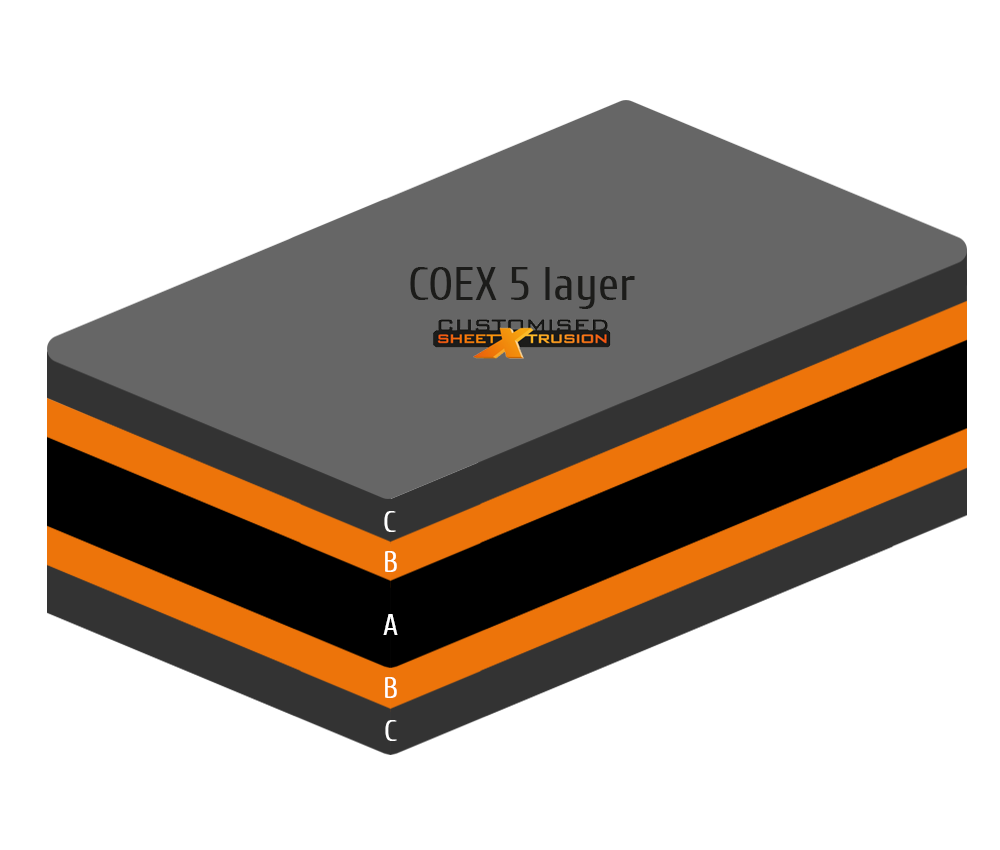
Coextrusion refers to the simultaneously extrusion of multiple layers of material. This type of extrusion utilizes two or more extruders to melt and deliver a steady volumetric throughput of different molten plastics to a feedblock (“blackbox”), which combines the materials and transport the material to the die head, which molds the material into the desired shape. The different layers thickness are controlled by the relative speeds and sizes of the individual extruders delivering the materials.

KΞΞN ®
By implementation of the principle of a Circular Economy, CSX wants to become one of the leaders in Europe in developing plastic sheet materials and film.

Sustainable
CSX is not only considering existing generations, but also future generations. Due to their environmentally friendly production process CSX is aiming to produce to state of the art sustainable standards and beyond.

Clean
Environmentally friendly production processes are at the forefront of CSX. CSX strives for a system in which raw materials are fully re-deployed in a Circular Loop system.
Frequently asked questions about co-extrusion
Co-extrusion is a manufacturing process in which multiple layers of plastic are extruded simultaneously. At CSX, two or more extruders are used to combine different molten plastics. The material is then shaped into the desired form via the extrusion die.
At CSX, mono-extrusion produces a single layer, di-extrusion combines two layers and tri-extrusion builds up three layers – ideal for advanced films and sheets.
Co-extrusion is used when a single layer of plastic is not sufficient to achieve the desired properties. By combining multiple layers, CSX can produce customised film or sheet material with, for example, a specific colour, layer structure, texture or additional functional properties.
We work with materials including LDPE, MDPE, HDPE, HMPE, PP, HIPS, TPS and PLA. The suitable material combination depends on the application, the desired properties and the technical possibilities.
Yes. We prefer to use post-industrial recycled materials that are free from contaminating impurities. We also work with bio-based materials derived from safe and clean raw materials.